RAIN
Cohort 21 · October 2026 · Admission open

Build real things in AI, robotics and automation.

RAIN's curriculum is 70% product development. You are not here for lectures — you are here to build things that solve real problems, and leave with a portfolio to prove it.

Apply nowSee fees
Flagship programme

Artificial Intelligence & Machine Learning AIML

From Python fundamentals to large language models, neural networks and production AI systems — ending in a real capstone built for African and global markets.

Duration12 months
Semesters3
Tuition₦7,700,000
ModeIbadan or virtual
Apply for AIML
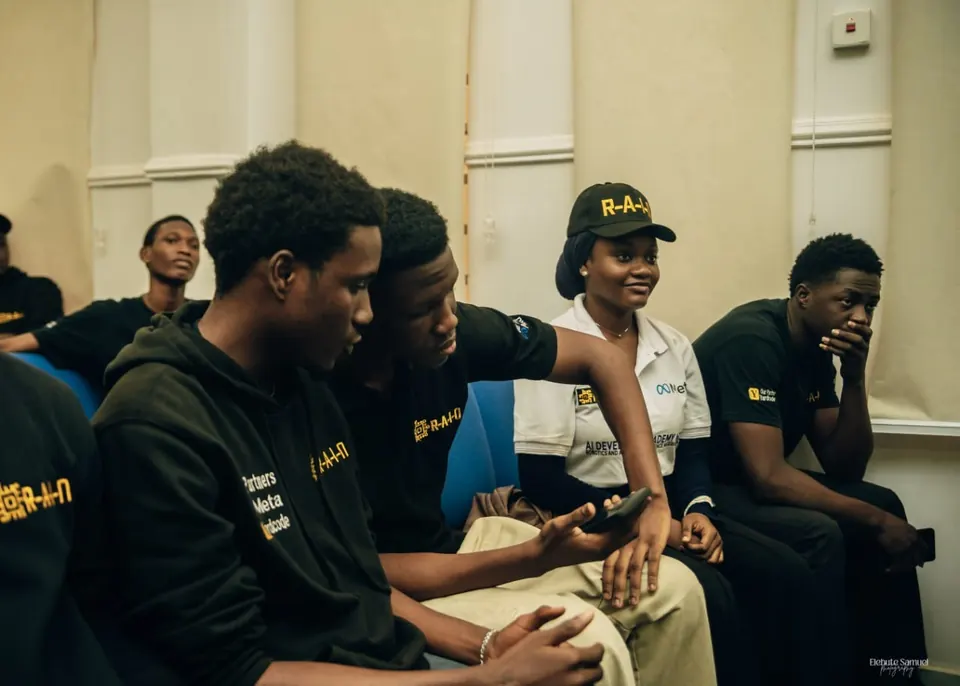
RAIN trainees presenting their project at a Friday seminar
Weeks 1–12
Foundation — Python, Data Science & AI Fundamentals12 weeks · Building the technical foundation
  1. Python Programming — Foundations to AdvancedVariables, control flow, functions, OOP, file handling, APIs, and production-grade Python patterns. No prior programming experience required.
  2. Data Science and Advanced AnalyticsNumPy, pandas, data wrangling, exploratory data analysis, statistical inference, and visualisation with Matplotlib, Seaborn, Tableau, and Power BI.
  3. Intro to AI and No-Code AI ToolsThe history and landscape of AI, prompt engineering, no-code AI platforms, and how to prototype with AI before writing a single model.
  4. Machine Learning I — Supervised LearningLinear and logistic regression, decision trees, random forests, SVMs, k-nearest neighbours, cross-validation, and real-world ML pipelines with scikit-learn.
  5. Machine Learning II — Unsupervised and Ensemble MethodsClustering (k-means, DBSCAN), dimensionality reduction (PCA, t-SNE), gradient boosting, XGBoost, and ensemble stacking strategies.
  6. Web and Desktop Application DevelopmentFlask web development, RESTful APIs, SQLite / PostgreSQL integration, and Python-based GUI applications for AI model deployment.
  7. Git, GitHub and Cloud ServicesVersion control with Git, collaborative workflows, CI/CD basics, AWS and Azure fundamentals, and deploying models to the cloud.
  8. Time Series ForecastingARIMA, SARIMA, Prophet, LSTM-based forecasting — applied to financial, health, and agricultural datasets.
  9. Database Management for AISQL, database design, data pipelines, and data warehousing — building the data infrastructure that AI systems run on.
  10. Cybersecurity Fundamentals for AI EngineersThreat modelling, secure coding practices, and protecting AI pipelines and deployed APIs.
  11. Project Management for AI ProductsAgile, Scrum, PRINCE2 concepts — how to manage AI projects from ideation to delivery.
  12. Mini-Project — Semester 1 DeliverableA working end-to-end ML pipeline solving a real problem — from data collection to deployed model.
Weeks 13–34
Advanced — Deep Learning, Computer Vision & NLP22 weeks · Advanced AI systems and specialisation
  1. Deep Learning and Neural Network ArchitecturesPerceptrons, multi-layer networks, backpropagation, activation functions, batch normalisation, dropout — built from scratch with TensorFlow and PyTorch.
  2. Convolutional Neural Networks (CNNs)Image classification, object detection (YOLO, SSD), image segmentation — applied to medical imaging, agriculture, and industrial inspection.
  3. Recurrent Neural Networks and LSTMsSequence modelling, text generation, sentiment analysis, and time-series prediction using RNNs and LSTMs.
  4. Computer Vision and Image ProcessingOpenCV pipelines, feature extraction, face recognition, optical flow, and real-time video processing.
  5. Generative AI and GANsGenerative Adversarial Networks — image synthesis, data augmentation, deepfake detection, and creative AI applications.
  6. Natural Language Processing (NLP)Text preprocessing, word embeddings (Word2Vec, GloVe), named entity recognition, question answering, and sentiment analysis.
  7. Large Language Models and Prompt EngineeringFine-tuning LLMs, Retrieval-Augmented Generation (RAG), embeddings, vector databases, and building LLM-powered applications.
  8. Reinforcement LearningMarkov Decision Processes, Q-learning, policy gradients, and RL for decision-making systems.
  9. AI Deployment, MLOps and Production SystemsDocker, Kubernetes, model monitoring, MLflow, model versioning, and building scalable AI systems that serve millions of users.
  10. AI Ethics, Fairness and Responsible AIBias detection, algorithmic fairness, explainability (SHAP, LIME), and the regulatory landscape for AI in Africa and globally.
  11. Specialisation Project — Advanced DeliverableA working advanced AI system — CV pipeline, NLP system, or LLM application — submitted and reviewed by the faculty.
Weeks 35–52
Capstone — Build, Deploy, Launch18 weeks · Real product. Real problem. Real world.
  1. Project Ideation and ScopingStudents identify a real-world African challenge — in healthcare, agriculture, education, security, or finance — and define a project that their AI solution will address.
  2. Data Collection and Pipeline EngineeringBuilding the data infrastructure for the capstone — APIs, web scraping, sensor data, labelling, and creating production-quality datasets.
  3. Model Development and IterationFull AI system development under mentor supervision — with weekly review sessions and peer critique.
  4. Deployment and Product LaunchDeploying the product to cloud infrastructure, building a user interface, and preparing for public demonstration.
  5. Research Documentation and Publication PrepWriting the technical report and preparing material suitable for journal submission — feeding directly into the B.Sc. degree pathway.
  6. Portfolio, GitHub and Professional ProfileBuilding a public GitHub portfolio, LinkedIn presence, and project documentation that international employers and graduate schools will see.
  7. Performance Evaluation, Certification and AwardsFinal assessment by RAIN faculty and external reviewers. Certificates issued. Outstanding projects recognised.
PythonTensorFlowPyTorchscikit-learnpandasNumPyOpenCVHugging FaceLangChainAWS / AzureDockerFlaskSQLGitTableauPower BI
Flagship programme

Robot Development & Automation RDA

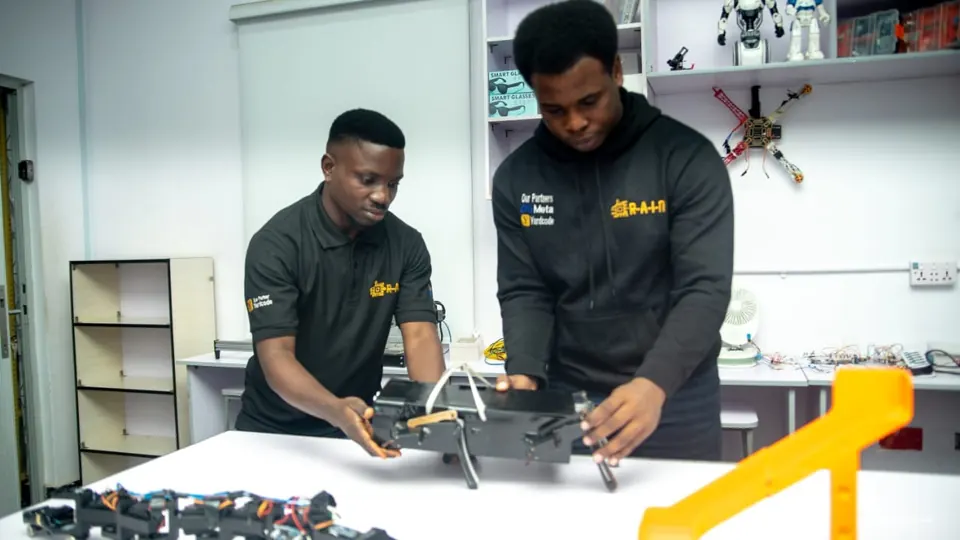
Two RAIN trainees assembling a robot in the lab

The most hands-on robotics programme in Africa. Build real robots, programme real microcontrollers, deploy IoT systems and develop autonomous vehicles on the same stack used in global industry.

Duration12 months
Semesters3
Tuition₦7,700,000
ModeIbadan (preferred)
Apply for RDA
Semester 1
Hardware, Programming & IoT FoundationsMonths 1–4 · Hands-on from Day 1
  1. Intro to AI & Robotics + No-Code AI & Prompt EngineeringThe landscape of robotics and AI — from industrial robots to humanoids. No-code AI tools and prompt engineering for immediate practical application before writing hardware code.
  2. Python Fundamentals for RoboticsPython programming with a robotics focus — scripting, automation, data handling, and interfacing with hardware. Students write their first hardware control scripts in Week 2.
  3. Product Design and DevelopmentDesign thinking, CAD fundamentals, product lifecycle, user research, prototyping methodology, and bringing ideas from concept to physical product.
  4. Microcontroller Fundamentals — ArduinoArchitecture of microcontrollers, GPIO, ADC/DAC, PWM, SPI, I2C, UART — programming Arduino for real physical outputs: LEDs, motors, sensors, displays.
  5. Python for Database Management, Web Development & ExcelSQLite, PostgreSQL, Flask APIs, Excel automation — building the data layer that connects physical systems to software applications.
  6. Internet of Things (IoT)Home automation, industrial IoT, sensor networks, MQTT protocol, cloud connectivity — students build and deploy a working smart system.
  7. Practical ElectronicsCircuit theory, Ohm's Law, transistors, op-amps, motor drivers, PCB reading, and soldering. Students build and debug circuits on breadboard and PCB.
  8. Advanced Microcontroller FundamentalsInterrupts, timers, real-time operating systems (RTOS), multi-sensor fusion, and complex embedded system architectures.
  9. Robot Manufacturing and Robotics-Aided ManufacturingMechanical design, 3D printing, CNC machining, robot assembly, actuator selection, and manufacturing automation concepts.
  10. Python for Desktop GUI ApplicationsTkinter and PyQt — building desktop interfaces that control robots and visualise sensor data in real time.
  11. Git & GitHub, Cloud Services, Cybersecurity & Python for ChatbotsProfessional software tools, cloud deployment, API security, and building natural language interfaces for robotic systems.
Semester 2
Autonomous Systems, AI & Advanced RoboticsMonths 5–8 · Building intelligent machines
  1. Raspberry Pi, ROS and Controller CoordinationLinux on Raspberry Pi, Robot Operating System (ROS) architecture, nodes, topics, services — the backbone of modern robotics software.
  2. Techniques for Digital TwinningCreating virtual replicas of physical systems — simulating robot behaviour before deploying to hardware. Gazebo, RViz, and URDF robot models.
  3. Control Systems Fundamentals and PID ControlFeedback loops, stability analysis, Laplace transforms, transfer functions — and PID tuning for precise motor and actuator control.
  4. Theories in Neural NetworksFundamentals of deep learning from a robotics perspective — how neural networks enable robots to learn from their environment.
  5. Techniques for Computer VisionOpenCV, real-time object detection (YOLO), face recognition, colour tracking, depth sensing with stereo cameras — robots that can see.
  6. SLAM — Simultaneous Localisation and MappingHow autonomous robots understand their environment. Kalman filters, particle filters, LiDAR-based mapping, and occupancy grid maps.
  7. Path Planning AlgorithmsA*, Dijkstra, RRT, potential fields — algorithms that tell robots how to navigate from A to B while avoiding obstacles.
  8. GAN and Computer Vision AlgorithmsGenerative Adversarial Networks for synthetic training data, and advanced CV pipelines for robotics perception.
  9. Techniques for Natural Language ProcessingBuilding robots that understand human commands — NLP pipelines, speech recognition, and voice-controlled robotic interfaces.
  10. Drone System DevelopmentQuadcopter physics, flight controllers, PID for drones, GPS integration, autonomous mission planning, and safety protocols.
  11. Robot Arm KinematicsForward and inverse kinematics, Denavit-Hartenberg parameters, workspace analysis, and programming 6-DOF robot arms.
  12. Machine Learning and Intelligent ControlApplying ML to robotics — reinforcement learning for robot locomotion, behavioural cloning, and adaptive control systems.
Semester 3
Capstone Project & PortfolioMonths 9–12 · Build something real. Can be done virtually.
  1. Project Scoping and System ArchitectureStudents identify an industry or societal problem — healthcare, agriculture, security, manufacturing — and define a robotic system that addresses it.
  2. Hardware Design and PrototypingBuilding the physical prototype — PCB design, 3D printing, motor selection, sensor arrays, and power management.
  3. Software Architecture and IntegrationROS integration, sensor fusion, control algorithms, computer vision pipelines — bringing all semester learning into one coherent system.
  4. Testing, Iteration and Performance ValidationSystematic testing protocols, performance benchmarking, fault diagnosis, and iteration cycles under faculty supervision.
  5. Project Documentation and Research WritingTechnical reports, system documentation, and research-quality writing that feeds into the degree pathway publication pipeline.
  6. Portfolio, GitHub, LinkedIn and Professional BrandingA public-facing portfolio of completed projects, code repositories, and professional online presence ready for employers.
  7. Demonstration, Certification and AwardsFinal public demonstration of the capstone. Certificates issued. Outstanding projects recognised and rewarded.
PythonC++ArduinoRaspberry PiROSSLAMPID ControlOpenCVTensorFlowIoT / MQTTGazebo / RViz3D Printing / CADDrone DevRobot Arm KinematicsGitLinux
Dual track

Combined AIML + RDA — the complete AI & robotics engineer

A merged curriculum that uses the overlap between both programmes to go deeper rather than repeat. You graduate able to build both the brain and the body of intelligent systems — with both certifications.

Duration24 months
Semesters6
Tuition₦15,400,000
CertificatesAIML + RDA
Apply for Combined
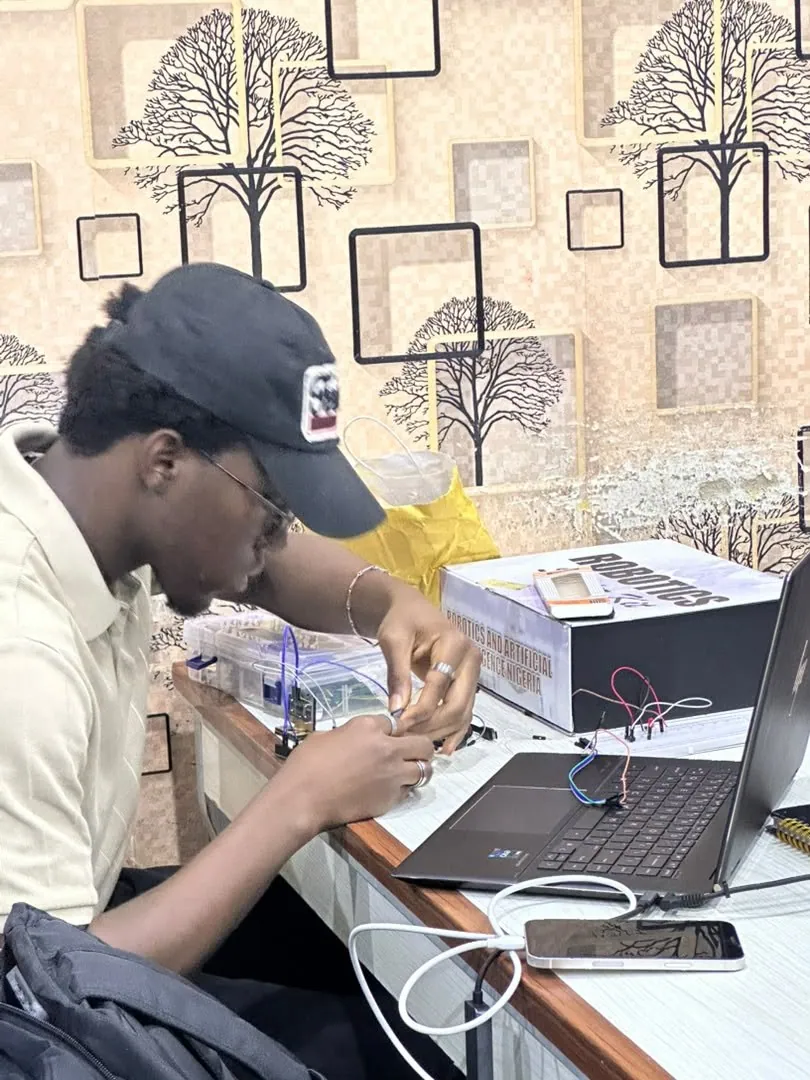
A trainee working on a circuit
Why not just AIML, then RDA? Back-to-back would repeat Python, computer vision, NLP and neural networks. The Combined track teaches each once, at full depth, from both the AI side (training models) and the robotics side (running them on real hardware).
Stage 1
Hardware Intelligence FoundationMonths 1–6 · Hardware + Python + Data Science together
  1. Intro to AI & Robotics + No-Code AI & Prompt EngineeringFull landscape — from neural networks to actuators, from transformers to servo motors. No-code prototyping before writing a line of code.
  2. Python — Complete TrackOne unified, deep Python track covering: basics, OOP, hardware interfacing, database management, web development, desktop GUI, API integration, and chatbot development. No split between "Python for AI" and "Python for Robotics" — one language, total mastery.
  3. Product Design and DevelopmentDesign thinking, CAD, 3D printing, prototyping, and product lifecycle — creating both hardware and software products.
  4. Microcontroller Fundamentals — Arduino to AdvancedFrom GPIO to RTOS in one track — stepping up from Arduino to complex multi-sensor embedded systems without a repeat semester.
  5. Data Science, Analytics and Database Engineeringpandas, NumPy, SQL, data pipelines, Tableau, Power BI — building the data infrastructure that powers both AI models and robotic control systems.
  6. Internet of Things and Industrial AutomationHome automation, industrial IoT, MQTT, cloud connectivity, PLC fundamentals — the bridge between physical hardware and networked intelligence.
  7. Practical Electronics and Circuit DesignFrom Ohm's Law to PCB design — building circuits that underpin every robotic system in the programme.
  8. Robot Manufacturing and 3D DesignMechanical design, CNC machining, robot assembly, actuator selection, and manufacturing precision.
  9. Git, GitHub, Cloud, CybersecurityProfessional software infrastructure: version control, CI/CD, secure APIs, AWS and Azure for both ML models and IoT backends.
Stage 2
Machine Intelligence SystemsMonths 7–12 · Pure AI/ML — extended and deepened, not repeated
  1. Machine Learning I & II — Unified Deep TrackFrom supervised learning to reinforcement learning in one continuous track — going deeper than either standalone programme. Includes ensemble methods, XGBoost, and RL for robotics control.
  2. Deep Learning and Neural Network ArchitecturesCNNs, RNNs, LSTMs, Transformers — full architecture study with implementations in both TensorFlow and PyTorch, applied to both AI and robotics problems.
  3. Computer Vision — Full Depth (AI + Robotics Track)OpenCV + deep learning computer vision merged into one programme. Model training, real-time inference on edge devices, YOLO deployment on Raspberry Pi. No repeat — just depth.
  4. Natural Language Processing and Large Language ModelsFrom NLP pipelines to fine-tuned LLMs, RAG systems, and voice-controlled robotic interfaces — the language of intelligent systems.
  5. Control Systems and PID ControlFeedback control, transfer functions, Laplace transforms, PID tuning — the mathematics and engineering of making things move precisely.
  6. Raspberry Pi, ROS and Controller CoordinationLinux, ROS, nodes, topics, services, URDF — the software backbone of every professional robotic system.
  7. SLAM and Path PlanningKalman filters, LiDAR mapping, A*, RRT — how autonomous systems know where they are and how to get where they need to go.
  8. Drone System DevelopmentQuadcopter physics, PID for UAVs, autonomous mission planning, computer vision integration for drones.
  9. Robot Arm Kinematics and Intelligent ControlForward and inverse kinematics + reinforcement learning for robot arm control — combining hardware knowledge with advanced AI.
  10. AI Deployment, MLOps and Edge ComputingDocker, Kubernetes, TensorFlow Lite, model deployment to embedded systems — running AI on robots in the real world.
Stage 3
Autonomous Systems IntegrationMonths 13–18 · Unique to Combined — AI meets Robotics
  1. Digital Twinning and SimulationCreating virtual replicas of physical systems — simulating entire AI-powered robot systems before deploying to hardware. Gazebo, RViz, and physics simulation.
  2. Reinforcement Learning for Physical Robotic ControlTraining robots to learn from their environment using RL — locomotion, manipulation, and adaptive control in physical systems.
  3. Intelligent Autonomous SystemsCombining computer vision, NLP, SLAM, and path planning into coherent autonomous systems that perceive, decide, and act.
  4. Generative AI and GAN for RoboticsUsing GANs for synthetic training data generation, simulation-to-real transfer, and AI-augmented robotic design.
  5. AI Ethics, Safety and Responsible EngineeringBias in robotic systems, fail-safe design, regulatory frameworks for autonomous systems, and the ethics of building machines that make decisions.
  6. Research Methods and Technical WritingPreparing for publication — how to write research papers from your RAIN projects, structure academic arguments, and cite prior work.
  7. Pre-Capstone Ideation and Industry SeminarsFriday seminars with industry partners, guest researchers, and alumni. Capstone project definition, scope, and mentor assignment.
Stage 4
Integrated Capstone & LaunchMonths 19–24 · The most ambitious projects in the country
  1. Integrated AI + Robotics Capstone ProjectA full-scale project combining both tracks — e.g. an autonomous medical delivery robot with computer vision and voice control; a smart agricultural drone with crop disease detection; a rehabilitation exoskeleton with adaptive AI control.
  2. Hardware + Software Integration and ValidationBuilding the complete physical + software system. Testing, iteration, fault diagnosis, and performance benchmarking.
  3. Research Paper and Publication PipelineRefining the capstone into a publishable academic paper or thesis — feeding directly into the B.Sc. degree pathway with our university partner.
  4. Portfolio, Startup Ideation and CommercialisationBuilding the business case for the capstone project. Product roadmap, market analysis, and pitch deck preparation.
  5. Final Demonstration, Certification and AwardsPublic demonstration of the capstone project. RAIN certificates issued. Outstanding projects recognised with awards.
PythonC++TensorFlowPyTorchOpenCVROSArduinoRaspberry PiSLAMPIDDrone DevRobot Arm KinematicsLLMsMLOpsAWS / AzureDocker3D PrintingIoTGitLinux
12–16 weeks

Short courses

Focused, intensive courses drawn from the full programmes. Prerequisite: a credit in O-Level Mathematics.

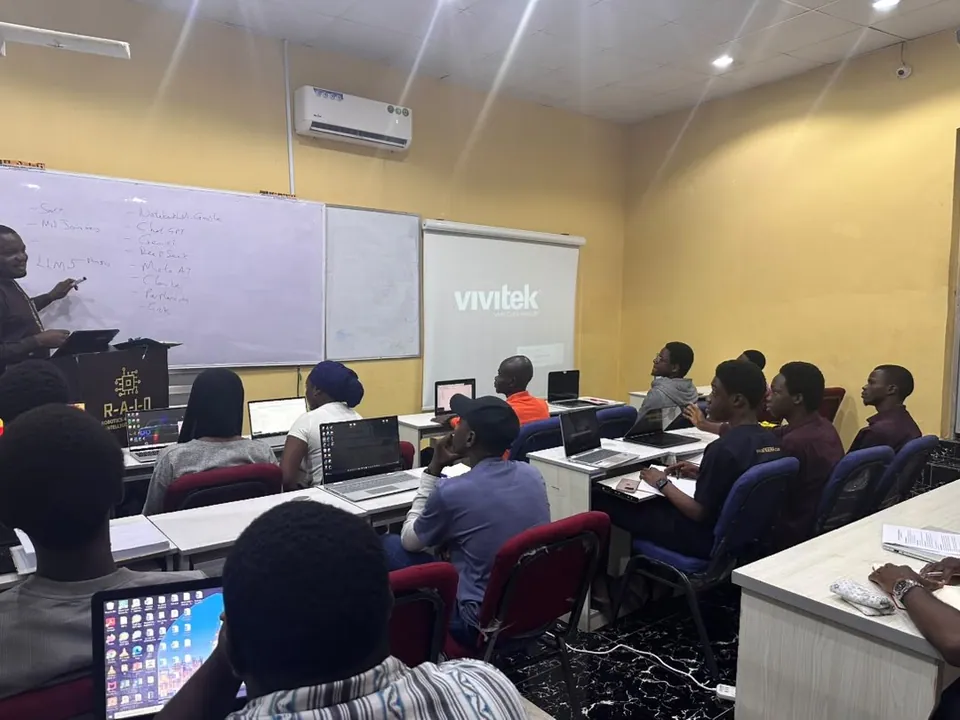
A classroom session
DSP

Data Science & Python Programming

Collect, clean, analyse, visualise and model data with Python, pandas, scikit-learn, Tableau and Power BI. Leave with a working data pipeline and a portfolio.

₦3,000,000 · 12–16 weeks

PythonpandasNumPyscikit-learnSQLMatplotlibSeabornTableauPower BIExcel
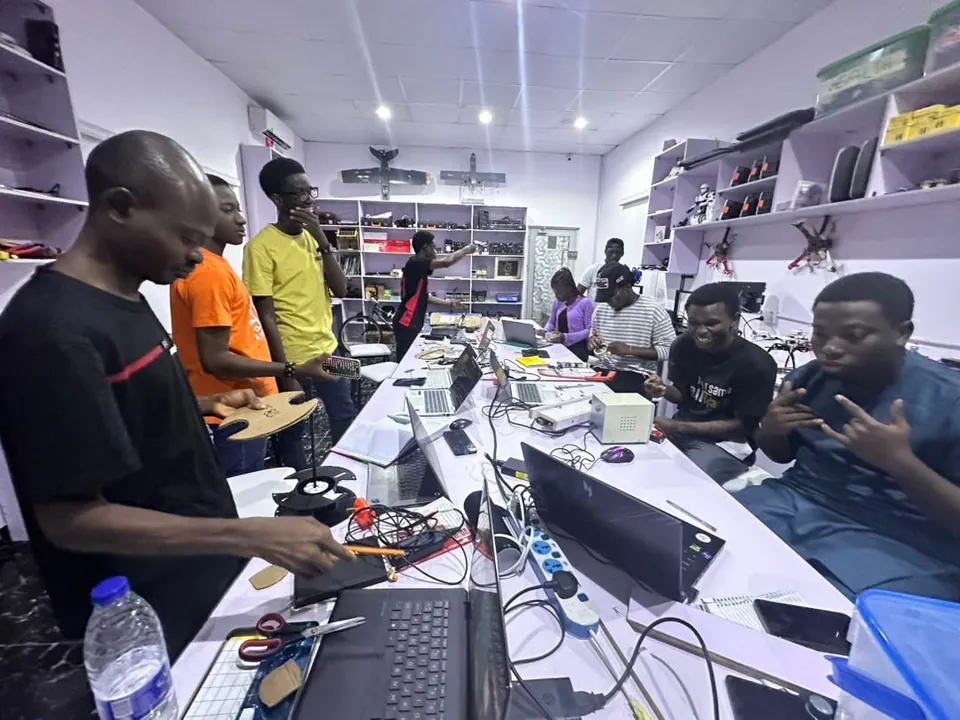
A build session in the lab
ESIOT

Embedded Systems & Internet of Things

Programme microcontrollers, design circuits and deploy connected devices — including a home-automation system and an IoT sensor network.

₦3,000,000 · 12–16 weeks

PythonC++ArduinoRaspberry PiIoT / MQTTElectronics3D PrintingGit
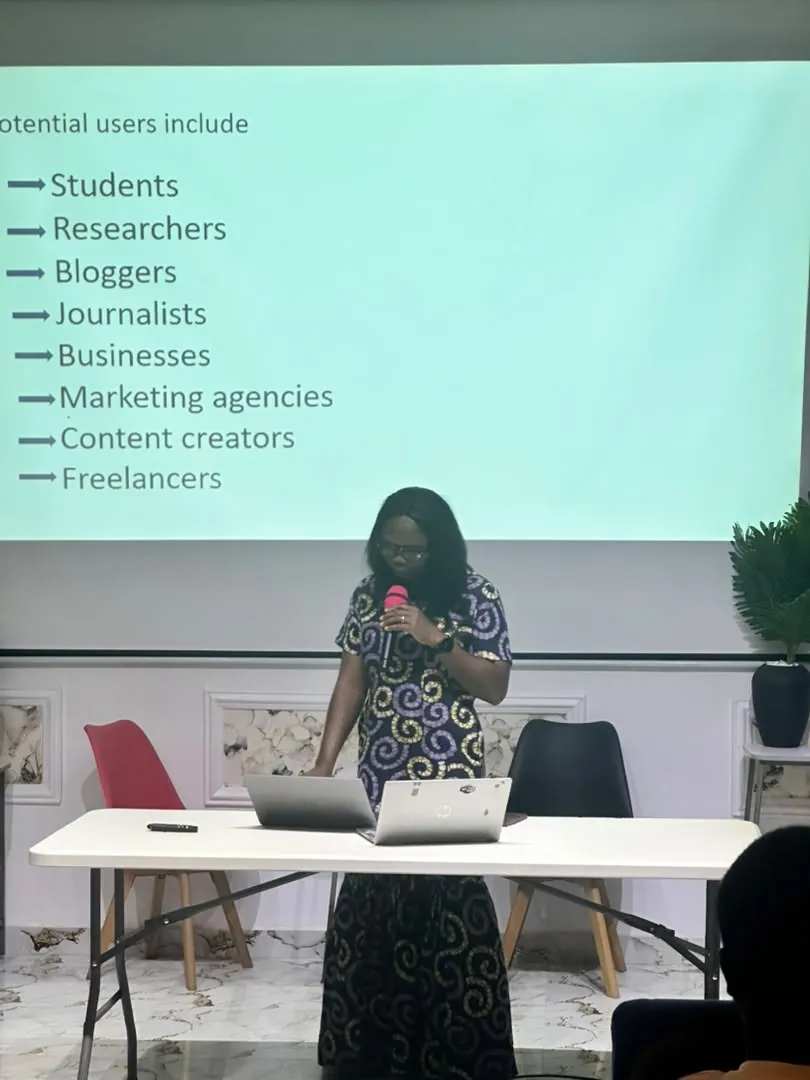
presentations
MLAI

Machine Learning / Introduction to AI

Supervised and unsupervised learning, neural networks and deep learning foundations — building and deploying real models. Prerequisite: certification in Python.

₦3,000,000 · 12–16 weeks

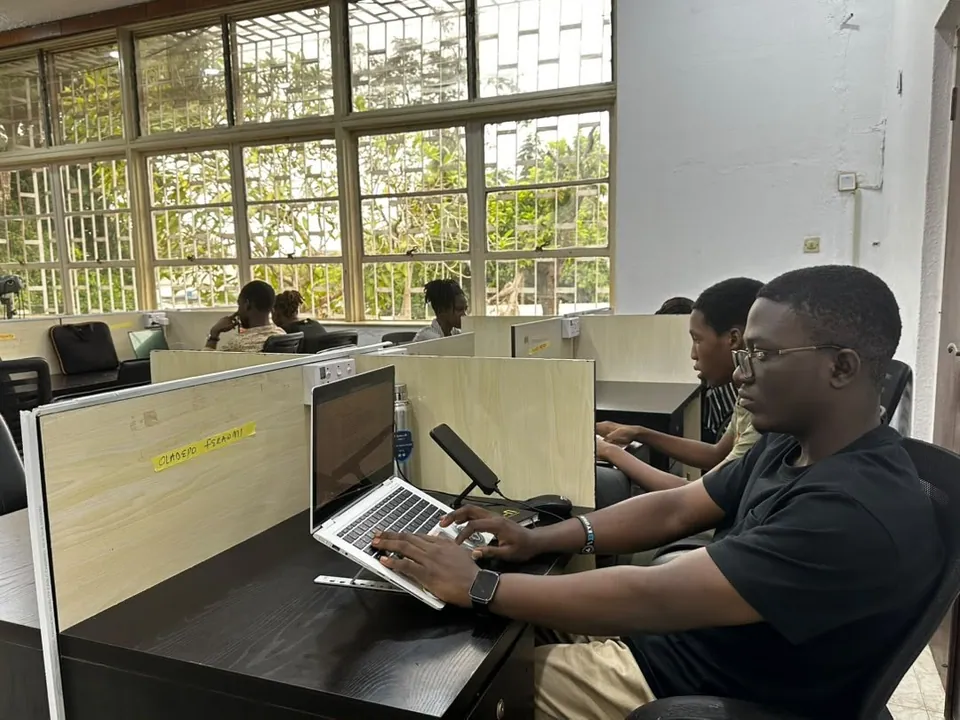
Trainees at work in the computer lab
ONLINE

Task-by-Task AI — 28 days

For working professionals: better emails, presentations, spreadsheets and decisions with AI, one practical day at a time. No engineering background needed.

Self-paced · fully online · certificate

Investment

Fees & payment plans

Pay in instalments — you do not need the full amount upfront. Pay the whole tuition in one transfer before you start and get 5% off (tell admissions before you transfer). Only ever pay into the account on your admission letter.

₦7,700,000
On-site accommodation (optional)
RoomSession6 months3 months
Two-person en-suite₦1,700,000₦1,200,000₦900,000
Private room on request₦3,000,000about ₦2,100,000about ₦1,600,000

Inside the facility: air conditioning, water heater, internet, kitchenette and laundry. Acceptance fee ₦10,000. Fees are not refundable.

Culture & community

Life at RAIN

A research facility, a product lab, a maker space and a community of serious technologists — across several buildings in one compound in Ibadan. See the campus.

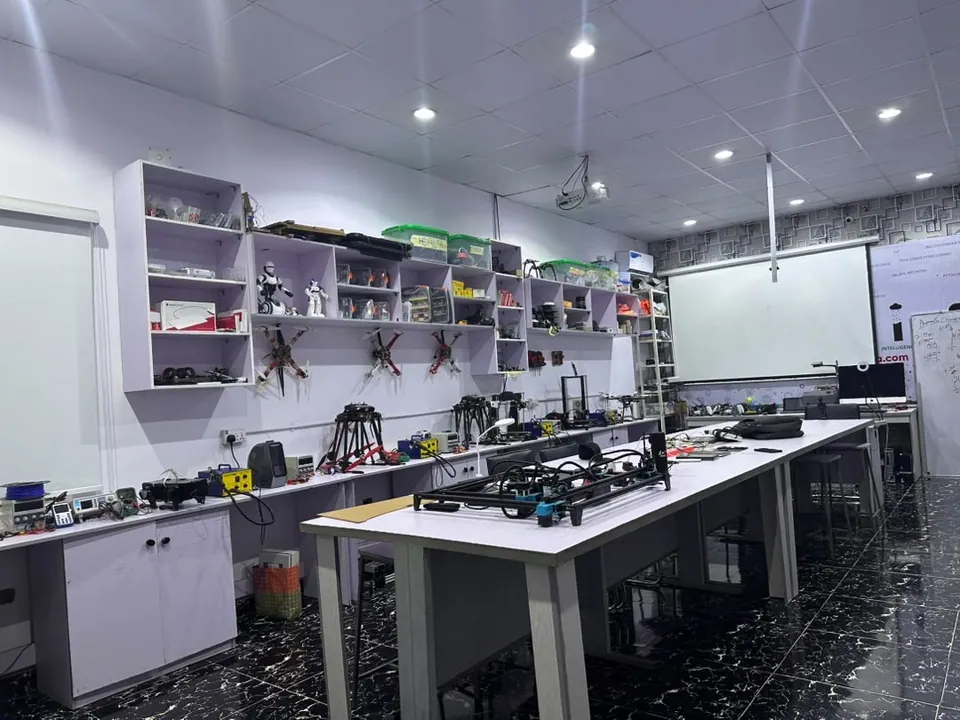
The robotics lab

The lab

Robot arms, drones, 3D printers, CNC machines, oscilloscopes, Arduino and Raspberry Pi kits, LiDAR, depth cameras and GPUs — hands-on from day one.

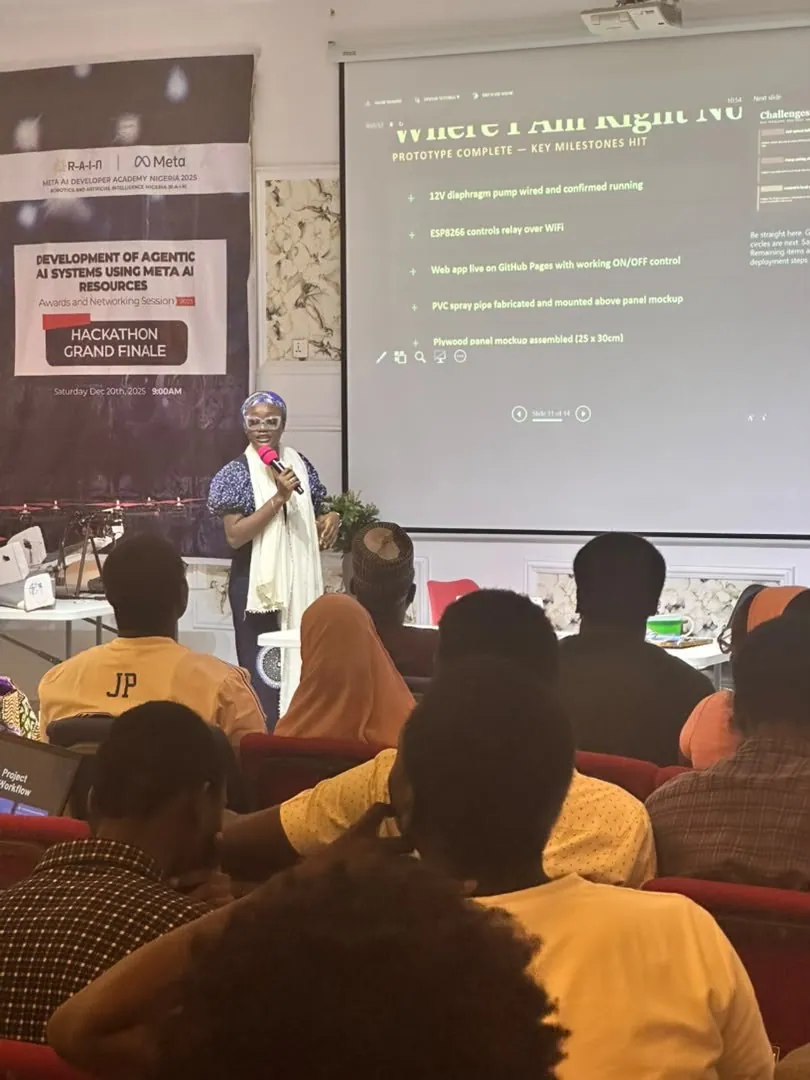
A seminar talk

Friday seminars

Every Friday trainees present their projects and get structured feedback; researchers and industry engineers present their work too.

A build session in the lab

70% product development

Scream detection for public buses, rehabilitation exoskeletons, carbon-emission tracker drones, smart drug dispensers. Real problems, real solutions.

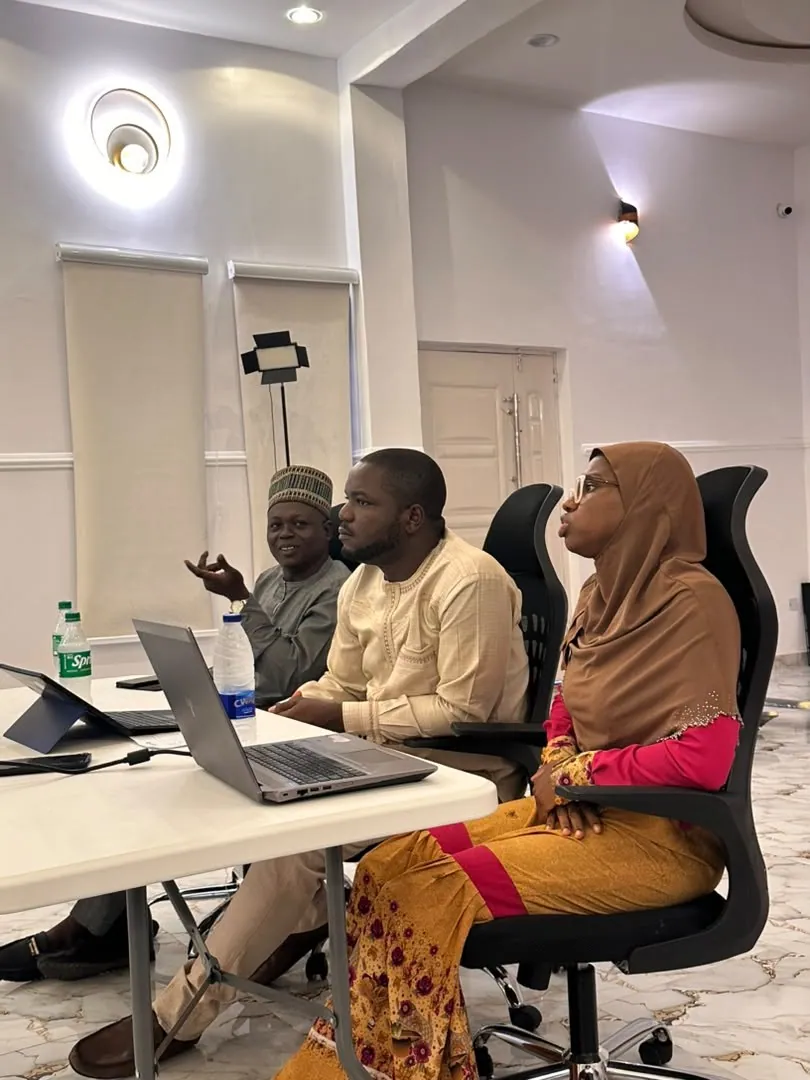
Trainees in a project discussion

International community

Trainees from across Nigeria, West Africa and beyond — some came on study visas specifically to train at RAIN.

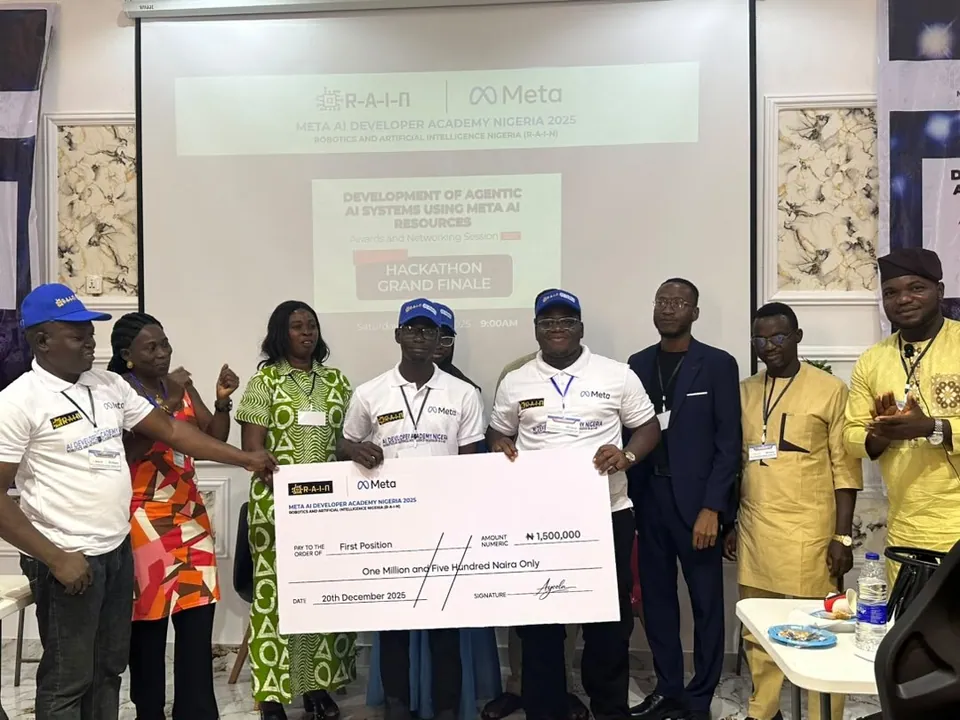
Prize Winning

Awards & recognition

Outstanding projects are recognised at certification events and put forward for external competitions.

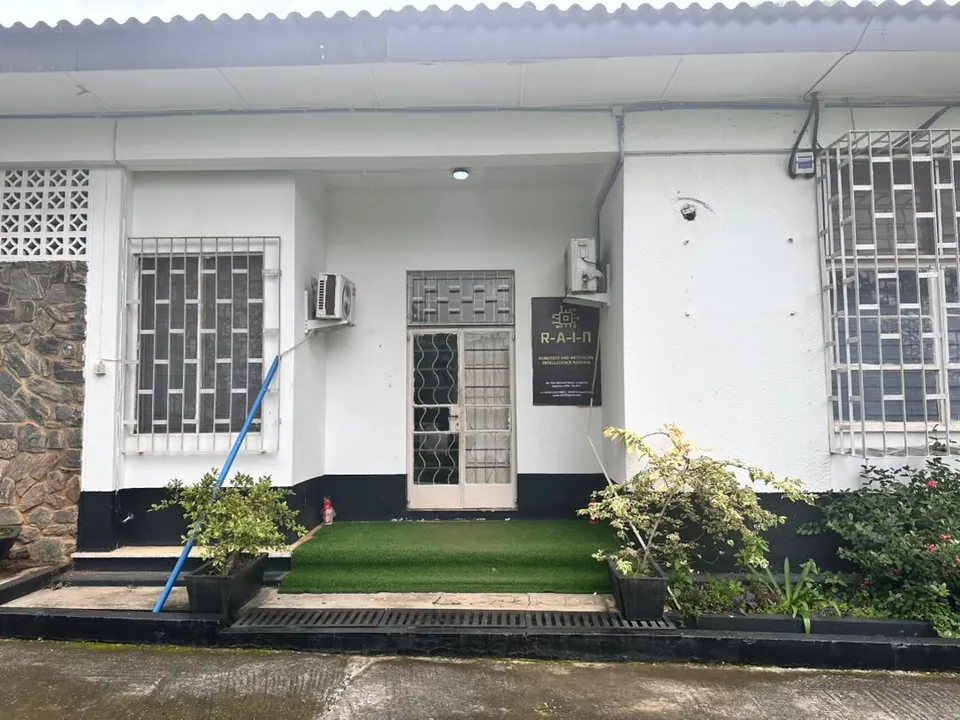
A RAIN building

Live on site

En-suite rooms inside the facility, with power, internet and laundry — live and breathe the work.

After RAIN

Where RAIN graduates go

RAIN trains you to create jobs — and our graduates are among the most sought-after tech talent in the region, because they can actually build things.

AI EngineerBuilding production AI systems for fintech, healthtech, edtech, and enterprise clients across Nigeria and globally.
Robotics EngineerDesigning and deploying automated systems for manufacturing, logistics, agriculture, and security.
Data ScientistTurning raw data into actionable intelligence for banks, telecoms, government agencies, and startups.
IoT DeveloperBuilding connected device ecosystems for smart homes, smart factories, and smart cities.
Drone Systems EngineerDeveloping autonomous UAVs for surveillance, agriculture, delivery, and environmental monitoring.
AI Research & PhDMultiple RAIN alumni have been admitted to PhD programmes abroad — on scholarships — in fields they had no prior computer science background in. Their RAIN transcripts opened doors.
Tech FounderRAIN's 70% product focus means many graduates leave with a product that is already halfway to a startup.
International EmploymentRAIN alumni are working in the UK, USA, Canada, and across Europe — in roles that non-RAIN Nigerian graduates simply cannot access.
Alumni

What our alumni say

“The RAIN curriculum is not a shortcut — it is an acceleration. I had no computer science background before RAIN. After, I was admitted into a PhD programme abroad on a full scholarship. My RAIN transcript was the reason.”

RAIN AlumniPhD Candidate — International University (Scholarship)

“I came to RAIN from another country specifically for this programme. Getting the study visa was worth every step. I have since worked on projects in automation and AI that I could not have imagined building before.”

International AlumniAutomation Engineer

“RAIN trained me to think in products, not in theory. By the time I graduated, I already had a client for the system I built in my capstone. That is what RAIN does.”

RAIN AlumniTech Founder

“I did both AIML and RDA. The combination is incomparable. I can now design the hardware, write the control software, and deploy the AI model. There is almost nothing in robotics I cannot build.”

Combined Programme AlumniSenior Robotics Engineer

See every certified RAIN developer

Cohort 21 starts October 2026.

Admission continues into an ongoing cohort until about halfway through, with catch-up classes. Talk to admissions on +234 811 427 6861 or admissions@rainigeria.com.